Thursday, August 20, 2009

Keep Your Femininity in the Workplace

Yes, you can be a strong woman, a powerful professional and still retain your femininity in the workplace. Femininity doesn’t equate to sexuality, nor does it mean you only wear frilly clothes with lots of lace and pink flowers. Femininity means responding to your intuition, to your capacity for caring/nurturing and to your ability to multi-task. Femininity also means you stay true to yourself and that you embrace your authentic self. In other words, don’t try to be like the guys just because you think they will like you more or that you’ll be promoted faster.

Connie Cwik is a corporate coach for 20+ years and when she was working for Microsoft was responsible for building a strong team between Microsoft and GM. As a result, Microsoft’s rating on the coveted GM Strategic Vendor Scorecard from 16th to 2nd – in just 36 months. I had the pleasure of meeting Connie at the Coffee and Contacts Power Lunch at Brio Tuscan Grill on Friday, August 14th where she gave an energetic talk on “Femininity in the Workplace.” Dressed in a pale pink jacket with a bias-cut floral cut and pink shoes before the crowd of over fifty women, Connie stressed to the group, “We as women have a way to connect at a different level than men. When you give up your femininity, you give up your power.”

Connie further emphasized how women need to acknowledge their gifts and their strengths that make them great. “Femininity is not a weak term at all! Being feminine means being a lover to your husband or partner, a nurturer and a best friend to all of your girlfriends.”

I also see that acknowledging one’s femininity means setting boundaries and knowing that it’s OK to not do work (if you work for yourself) between the hours of 4-9pm so you can pick up your kids, make dinner and put the kids to bed. Now if you work in a traditional workspace, you need to know it’s OK to leave at 5 or 5:30 to pick up the kids from daycare and not be made to feel guilty that you’re not sharing your weight. You need to know that you put 110% into your work and that you are productive and focused. Before I had kids I worked for a company that made working mothers feel guilty when they didn’t come in on Saturdays or stay till 7pm every night. A few women were on a flexible schedule (coming in at 7:30 and leaving at 4:30), but their bosses didn’t treat them with respect. No one complained because they were scared about losing their job. Of course no one was happy. Studies show that work places that allow for flexibility increase their productivity and morale. In any case, my old company experienced high turnover because many women braver than myself left to seek better working conditions. Since those dark days, I’ve sought a life-family balance and that includes working for myself and not trying to be somebody I’m not.

But with whatever career path women choose, they need to know that they have special gifts that come with being a woman. These gifts include intuition, nurturing and multi-tasking. Intuition is important so you may attract the best business partners and the best clients for you. Nurturing increases morale and employee retention. Connie gave an example of how she repurposed her employee “Paul” from one job into another, rather than firing him because he was a valuable employee who just wasn’t in the right position for his skill set. Because of her attention to his situation, Paul still keeps in touch with Connie years later. Lastly, multi-tasking makes women more productive and focused and allows them to handle stressful situations with grace and aplomb.

Connie concluded, “The only way we can keep the family-life balance is to be authentic to who we are and that means that we don’t all have to be the same!” I took this to mean that women should stop comparing themselves with other women and pay attention to their own thresholds and pain tolerances. Some moms with three children can do more than some moms with one kid and you know what? And that’s OK! But above all, we need to stop wishing we didn’t have family obligations or emotions so the powers that be could like us better. We need to be who we are (women who care about others and family!), set realistic long-term goals (i.e. not try to be superwomen), and celebrate our feminine powers which set us apart from the guys!


Monday, August 17, 2009

Child of the South Book Review

Child of the South Child of the South by Joanna Catherine Scott


My rating: 3.75 of 5 stars
Full of rich language, passion and tension, Joanna Catherine Scott’s Child of the South continues the story of her characters from The Road to Chapel Hill. Her new novel is set in the years immediately following the Civil War told from the point of view of two star-crossed lovers: 24-year-old Eugenia Mae Spotswood, the assumed white daughter of a failed Wilmington businessman and now a nurse for the Freedman's Bureau, and Tom, a former slave who owns a large farm outside Chapel Hill. They initially met as mistress and slave; Eugenia gave Tom his freedom papers and after capture he eventually became a scout for the Union army under the leadership of a dashing mulatto, Abraham Galloway, who taught him the importance of standing up for himself, as well as how to read and write. Galloway is an actual historical figure who died under mysterious circumstances, which Scott fictionalized in her book.

More than anything, Eugenia wants to find her birth mother, whom she knows still lives around Wilmington. This woman was her father's black mistress. Eugenia has a chance to stay in Chapel Hill, but she knows she must find her mother and discover who she really is. Seeing Eugenia as a mixed race person was especially hard for me. We learn that Eugenia has very curly, unruly hair, but other than that, there aren't many clues. No one suspects she could have any black blood in her, not even her Confederate cousins in Wilmington, where she lives for four years after the Civil War. I wanted her to be darker, or at least see something about herself that she knows is different.

Eugenia's story is told in the first person and Tom's is in third person, which is really the only way that all of the historical perspectives can be discussed since Eugenia can't always be in the same place as the decision makers at every turn. However, Eugenia is a catalyst in her own right by balancing historical accuracy. Scott does a great job of making sure Eugenia doesn't go too far beyond historical prejudice between blacks and whites, although at times I was wondering if Eugenia wasn't just a little too liberal. The point of view shifts are divided by chapter so there's no reader confusion and I liked this since I always felt I knew what was coming.

Scott's strengths are with the accurate sensory details of this time and place and with the language. I love how she uses "fell to" a great deal and how she doesn't overdo the African American dialect. Her dialogue is sharp and the details set the tone without being overdone. However, I would have liked to have seen more action and a quicker pace throughout the book and less sitting around talking about the future. Because of the leaps in time there was a great deal of summary, which Scott handled well. However, I would have liked to experience a fight with the Klan or a narrow escape; I always felt that most of the good action happened off stage.

As for the characters, I liked the secondary characters rather than the primaries. Clyde Bricket is an amputee and Tom's former owner and now business partner/fellow farmer and he's very interesting. So is Christopher Clark-Compton, Eugenia's cousin who wants to be her husband. He's not very savory, but he does have his gentler moments. The heroes in the book: Eugenia, Abraham, Tom did seem a little too perfect, but that being said Eugenia had the best voice. We really could experience what 1865 felt like from her point of view. Scott never shies away from addressing post Civil War politics, so we see the great class and race divide that still haunts us to this day.

View all my reviews >>

Friday, August 07, 2009

Going Above and Beyond Book Review

Going Above and Beyond Going Above and Beyond by Katharine C. Giovanni


My rating: 3 of 5 stars
Going Above and Beyond by Katharine Giovanni surveys lead concierges in the hospitality industry on how to exhibit the best customer service possible in business and in your personal life. This book's audience is entrepreneurs, concierges and anyone else who wants to know more about delivering exceptional customer service.
Giovanni divides the book into fifteen chapters, of which she has eleven interviews which discuss topics such as professional image, handshakes, international protocol and more. Many themes are repeated throughout the book such as being nice to customers, never say no, and do whatever the customer needs. I used to be in retail and many of these concepts in Giovanni's book are not new to me and I wished she could have delved into more detail, especially in the communications and international protocol, which was probably her most interesting chapter. For instance, I didn't know that the British think its rude to talk with your hands in your pockets or that feet are considered unclean in South Africa and India.
I loved it when Giovanni would share her customer service horror stories with us such as when she and her boys drove up to a very rude manager at the Drive Thru or when she received a rude man on the phone who wanted to speak to the boss (Giovanni is the boss, along with her husband, Ron). I could have enjoyed more of these personal anecdotes rather than have eleven interviews which really didn't say anything new or fresh. I also wanted more insight into email, speech, dress, posture and speaking. Perhaps she could have listed 10 things of not to do on a voice mail outgoing message or what not to do in an email.
Overall, this is a quick read that emphasizes how important customer service is to grow and sustain your business. My favorite line from Giovanni is, "I return everyone's email lightning fast, even when I'm on the road...this simple thing has done more for growing my business than almost anything I've done." Great advice how important it is to be nice!

View all my reviews >>

Women Embracing Creativity Book Review

Women Embracing Creativity: Unleashing Your Inner Artist Women Embracing Creativity: Unleashing Your Inner Artist by Christina Thompson


My rating: 5 of 5 stars
Christina Thompson's Women Embracing Creativity: Unleashing Your Inner Artist does an excellent job of bringing together tips on motivation, creativity concepts, fear of success, making room for creativity and more. In one book you can discover how to set time aside for yourself and how to begin your creative practice which can be dancing, fine arts, writing, singing and more! I have so many books in my library that cover these same subjects, but in Christina's there are all in one source and they are built upon and thoroughly investigated. This book is a companion to Christina Thompson's 8 week Creativity Course she teaches several times a year, but it can certainly stand on its own and does. Christina also includes specific homework exercises such as logging your successes, starting a gratitude journal and paying attention to what's around you.

I can't talk enough about how wonderful and encouraging this book can be for emerging artists. Christina weaves in personal stories, academic references and solid results-oriented solutions for when you feel stuck. She encourages her female readers to stop being an Artist-in-Hiding and stop doing everything for your family. Be creative and be yourself! But I like that she doesn't just say be selfish with your needs and totally ignore your family, either. Instead she tells us to communicate with our families our creative needs and make sure everything is out in the open.

I know in my busy life, I have to make sure that I tell my husband what's going on in my week so there are no surprises in our schedule, and sometimes he wishes he wouldn't have to take care of the kids all day or all weekend. But I have to work at my success and at my career and that involves spending time away from home occasionally. I also try to not have two night events two days in a row so I can be there for my family. Sure my writing career is important but not at the expense of my family. All artists have to know how to balance work and family since we live with being an artist all of the time. It's a lifestyle and not something we leave at door like most traditional W-2 jobs.

One of the points Christina stresses is that successful artists must practice. Do you think Rob Thomas just started singing "Smooth" that first time and it was perfect? I don't think so. Or did a beautiful painting emerge from the first series of brushstrokes? No! A masterpiece emerges only from returning to the canvas, or to the page, or to the dance floor again and again. Chistina also encourages emerging artists to find a great teacher/mentor who guides them on their way. The ones who fail are the ones who don't put the work in and stay glued to the world of ideas. Christina also does a great job of breaking down fear and enumerating the excuses artists make when they don't want to get a project going. After all, who wants to start something that you know will not be perfect because you're new at it? Christina stresses that it takes dedication and commitment to follow through on your dreams and nurture the seeds of creativity.

She also talks about how parents tell their kids not to be artists because this lifestyle isn't "safe" and that's why so there are so many would-be artists who haven't found their path yet. This point I could totally relate to and why I volunteer so much with young people who want to be writers.

Thank you, Christina, for writing this book for all artists and artists to-be. This book is must-have reading.

View all my reviews >>

Wednesday, August 05, 2009

How to Say No to Fear

We’ve all had a case of “I don’t wannas” or “I’m too tired” or “I’ll do it tomorrow.” Feeling these impulses as we’re working on any kind project is perfectly normal, but do we push on and complete it? Or do we give in to fear? Don’t you notice that you usually procrastinate when you’re faced with something that you know will be time-intensive or with something that doesn’t yet feel comfortable to you?
I faced a case of the “don’t wannas” this week when I had to work on a new brochure and when I had to create my newsletter. I finished both projects because of my self-imposed deadlines, but I wished I had approached my work with more enthusiasm and had started them earlier. I realize now that I dragged my feet on both the brochure and newsletter since I know I could be judged on my work. Someone might spot a mistake I made and call me out on it. Someone could tell me that I’m not a very good writer/editor if I can’t make everything perfect in my work! But I didn’t let my fear win. I scrunched up my face, turned on Bob Seger and let the work “Roll Me Away.” It’s interesting that this fear of creating anything new can prevent you from completing your project. It’s sometimes called “The Fear of Success,” which is a recognized phobia. According to Michelle Courtney, editor of Triangle B2B.com (business to business) blog, “Usually the people who have this fear the worst have no idea they have it!” Courtney spoke about the Fear of Success at last Friday’s Final Friday Forum, sponsored by Dancing Elephants at the BNC (Business Networking Center) of Cary.
I know that as a creative person I can deal with my fears and conquer them, but this may not be true of others who are just discovering their creative talents. They are undertaking something new and they may fear failure. They may feel that they lack support from their family and friends. Or they may be afraid of making mistakes. Courtney adds, “We’re taught at a young age that failure isn’t a good thing, so we’re not taught to learn from our mistakes. This kind of thinking makes us inert.” And inertia keeps us in place, leaving us unable to achieve our dreams.
Christina Thompson of Summerglen Music wrote this about fear in her new book, Women Embracing Creativity: Unleashing Your Inner Artist.
Just as the pioneers faced attackers on their westward journeys, we may easily be ambushed by fear as we try new things. Unfortunately, it’s not always easy to identify fear for what it really is. Here are some common disguises fear wears when it tries to sneak into the lives of creative people:
1. needing to be in control
2. tolerating unhealthy situations and people
3. being resistant to change
4. creating unnecessary clutter, busy-ness or drama
5. making excuses; rationalizing
6. avoiding the problem
7. trying to manipulate others
8. procrastinating
Are you nodding your head at all or any of these? I know that in the past (and probably today, too) I’ll get so busy to avoid dealing with certain things. I’m also trying hard not to procrastinate on projects that aren’t the easiest to start.
So what can you do to lessen your fears? Michelle Courtney and Christina Thompson both suggest you write down specific goals, establish why a goal is important to you and show up every day despite the fear. That means practicing, doing the work, even if it’s not 100% perfect. Courtney says, “Play Devil’s Advocate and ask yourself what’s the worst that can happen?” I say “To Do” lists and concrete deadlines are a God-send.
I know it’s not easy to get out there when we could easily do the same old thing, but don’t you want to be known as someone who is stronger than her fears? I know I do.

Tuesday, August 04, 2009

The Blind Prophet Book Review

The Blind Prophet (Invisible War) The Blind Prophet by Dr. Larry Richards


My rating: 3 of 5 stars
REVIEW WRITTEN BY DANA BLOHM

Honestly, I was a little hesitant when Alice asked me to review The Blind Prophet. Considering the extremity of fantasy it might contain made me cautious when I began to read it. However, The Blind Prophet proves to capture the reader, even during the first few chapters. After doing some research, I discovered that Dr. Larry Richards is a renowned author, and Book 1 and Book 2 of the Invisible War series will be coming out this summer.
The Blind Prophet is a fantasy fiction novel about the religious invisible war between Satan’s army of demons and God’s army of angels. However complex it may sound, Richards does a superb job of simplifying the concept without losing his reader’s interest.
The main character, Zaki, is one of few to survive a horrific Babylonian raider attack on his village. After his entire family is brutally murdered, Zaki is left alive, yet blinded. His eyesight isn’t the only thing that is left blinded, but his faith in God is as well. Abandoning God makes Zaki the village’s recluse. Fifty years after the attack, an angel visits Zaki and he introduces him to the Invisible War. They travel together through the spiritual world observing key points of the war. While gaining the knowledge of the war, the angel reveals that God has an important mission for Zaki. As Zaki takes the journey to rebuild his faith, he works to fulfill this mission as one of God’s prophets.
Although this book is a work of fiction, it includes valid information from the Books of Ezekiel and Daniel. Richards gives life to these books, weaving them into his well-crafted novel. I thoroughly enjoyed Richards’s engaging and interesting novel, and I would definitely recommend it to anyone looking for more than your average fantasy novel.

View all my reviews >>

Keep On Keeping On Book Review

Keep On Keeping On Keep On Keeping On by Jean Davis


My rating: 3 of 5 stars
REVIEW WRITTEN BY DANA BLOHM

When reading the synopsis of Keep On Keeping On, one would assume this book to be your average inspirational story that you hope to pick you up off your feet. However, this is a story of two parents’ and their sons’ journey through addiction and the fight for justice. I was compelled to keep going from the author’s tone, which anyone could relate to. Her simple jargon makes it easy for the average reader to understand, eventhough the content is deep and complex.
This is a story of Ron Davis, a charismatic young man who struggled to beat a twelve year addiction to drugs, only to be brutally murdered at the age of thirty-nine. His parents, Brooks and Jean Davis, born and raised in the South, at first viewed his addiction as sinful. As dedicated Baptists in a small town, it was hard for either of them to comprehend the severity of Ron’s addiction. However, Jean’s unfailing faith shows throughout her writing and in every situation Ron put them in.
Keep On Keeping On goes extensively into the Davis’s family history, pride, and small town reputation. Jean repeatedly says throughout the book, “We had to swallow our pride” in order to help Ron overcome his addiction. This information may seem unnecessary during the reading, but as the reader approaches the end of the book, it is evident that all the little stories about small town life and family history all tie into Ron’s addiction. Family pressures, girlfriend issues, and competition also contributed to Ron becoming addicted to drugs in the first place.
After going through many difficult stages in Ron’s life, including many trips to rehabilitation centers and rebuilding his faith in God, it seems as if Ron was finally going in the right direction. With supportive parents by his side, Ron starts his new life, only to be brutally murdered. As if this tragedy wasn’t hard enough on the family, Jean and Brooks suffered through many years of struggle to gain justice for their son’s sake. This story exemplifies how flawed the American court system can be, and how much Jean and Brooks sacrificed for justice.
Keep On Keeping On is an inspirational story simple enough to be the perfect summer read. I recommend this book to anyone looking for extraordinary pick-me-up book that dives deep into the complexity of addiction and struggle for justice.

View all my reviews >>

This review was written by my intern, Dana, and you'll see much more from her soon!

Sunday, July 26, 2009

The Handmaid's Tale Book Review

The Handmaid's Tale The Handmaid's Tale by Margaret Atwood


My rating: 4 of 5 stars
I've always heard that The Handmaid's Tale by Margaret Atwood was one of those books you had to read. I picked it up at my favorite used book store: Falls River Books and nominated it for my book club's July selection. It was haunting, frustrating and I couldn't put it down. I was compelled to keep going from the narrator's first person voice when she tells us that she has to wear red and it's not her color. I thought to myself, here is a narrator in dire circumstances who still has some time to joke -- maybe I'll even like this person.

This person is the 33-year-old Offred whose real name is probably June. She is kept girl, or handmaiden, of Commander Fred and Serena Joy. Get it? She's "Of Fred." The other handmaidens also have male names such as Ofglen, Ofwarren and so forth. They dress in these medieval nun costumes of full head to toe red gowns with white headresses that prevent them from seeing the outside world and from the outside world seeing them. They hardly do any labor except going to the market once a day for their household and they aren't allowed to read. Offred has to have sex once a month with her master Fred PLUS his wife who is lying underneath her in this ceremony that hopefully will produce an heir for the commander.

The U.S. before the Republic of Gilead takeover was bleak: there was massive pornography, pollution, disease and suffering. The new leaders promised a change and boy did they deliver. June (the narrator), Luke, her husband, and their daughter who is never named try to cross the border into Canada, but June and daughter are captured. They are captured because women who is married to a divorced man is a sinner and adultress. We never know what happens to Luke. June is sent to handmaiden school since the government knows she has viable ovaries because she's already a mother and her daughter is adopted by a childless commander and his wife.

The commanders and their wives seem to be in their fifties and the young men are off fighting the wars. The poorer people are left alone and the undesirables (Unwomen) are sent to the Colonies to do toxic clean up detail without benefit of Hazmat suits. Offred's mother is one of the Unwomen since she is an unrepentant feminist.

As the novel progresses, we learn about the goings on in Offred's house and about how the other people in the house feel about her. We know right away there's an attraction between her and Nick, the Commander's manservant. Cora the maid likes her, while Rita the maid thinks she's a slut just because she's a handmaiden. Cora is perpetually afraid Offred will commit suicide because the last one they had did. Serena Joy dislikes her and the Commander sneaks around with her to play Scrabble (one of the funniest parts in the book).

The government hasn't taken everything away from Offred: she still remembers her daughter, her life before, her job, her husband and how it all ended. I was surprised they hadn't blanked her memory. Offred is a passive woman and she'd rather get along than claw her way through to freedom. She wants to live and thinks that if she keeps her head down and doesn't cause much trouble she'll do fine. Unfortunately,this can't be the case. In her small world she runs into Ofglen who is part of the resistance, and she interacts illegally with the two men living around her: the Commander and Nick. Events propel her forward and by virtue of who she is things happen. She is part of the political machine and their agenda for babies wherever she goes.

Unlike 1984 by George Orwell where we got the entire background and history of this dystopia all at once, in this book we get the history in bits and pieces. I liked how this book is like a puzzle and it's not all laid out for the reader. This pattern mirrors Offred's way of receiving information since she can't read and look up things; she has to get her knowledge in bits and pieces, too. By the end of the book, the reader should have a good idea of how Gilead came to be along with its rules and power structure.

Margaret Atwood criticizes both the right and the left in her novel. She's against feminists banning pornography since she feels that's censorship and Atwood's against the right taking arms against society's ills. The theme is that both sides can go to extremes and they do so in Handmaid's Tale.

This novel isn't dated and it still holds up well some 23 years after it was published. It's a haunting vision of what would happen if the people in charge decided to turn back the clock on womens' rights and strip women of their voices. Not only do women suffer, but so do men.

Read this book for Atwood's images, poetry and turns of phrase. Also read it for its well-thought out themes. I promise you, you'll never forget this book.

View all my reviews >>

Here are the discussion questions for this book:
The Handmaid’s Tale Reading Group Guide
1. The novel begins with three epigraphs. What are their functions?
2. In Gilead, women are categorized as wives, handmaids, Marthas, or Aunts, but Moira refuses to fit into a niche. Offred says she was like an elevator with open sides who made them dizzy; she was their fantasy. Trace Moira's role throughout the tale to determine what she symbolizes.
3. Aunt Lydia, Janine, and Offred's mother also represent more than themselves. What do each of their characters connote? What do the style and color of their clothes symbolize?
4. At one level, The Handmaid's Tale is about the writing process. Atwood cleverly weaves this sub-plot into a major focus with remarks by Offred such as "Context is all, " and "I've filled it out for her, " "I made that up, " and "I wish this story were different." Does Offred's habit of talking about the process of storytelling make it easier or more difficult for you to suspend disbelief?
5. A palimpsest is a medieval parchment that scribes attempted to scrape clean and use again, though they were unable to obliterate all traces of the original. How does the new republic of Gilead's social order often resemble a palimpsest?
6. The Commander in the novel says you can't cheat nature. How do characters find ways to follow their natural instincts?
7. Why is the Bible under lock and key in Gilead?
8. Babies are referred to as "a keeper, " "unbabies, " "shredders." What other real or fictional worlds do these terms suggest?
9. Atwood's title brings to mind titles from Chaucer's The Canterbury Tales. Why might Atwood have wanted you tomake that connection?
10. What do you feel the "Historical Notes" at the book's end add to the reading of this novel? What does the book's last line mean to you?

Friday, July 24, 2009

Don’t be Afraid of Going to the Social Media Party

Even if you don’t use social networking, i.e.: Facebook, Twitter, Linked In, Inside 919 (ning) or other social media sites, for your business, it’s still important to join the social media party because if you don’t, you’re missing out. In fact, this week my mother-in-law just signed up for Facebook because she doesn’t want to miss out on all of the conversations going on between her progeny. And she wants to view all of the fantastic photos I’ve posted from our summer trips. The way the world is working now, people go to social media sites to find out what’s going on via their friends’ links and comments. I found out on Facebook that Walter Cronkite died almost as soon as it was announced and if you use Twitter, you can receive almost instantaneous news. We’re moving away from people going to websites to find out info; instead, users are more passive and are waiting for info to come to them via status updates, blog feeds, e-newsletters and more.
These last two weeks I’ve learned a great deal about social media from two local experts, Deidre Hughey (pictured above) and Eileen Batson, who spoke at my North Raleigh Coffee and Contacts group. Deidre discussed three rules of social networking and several mistakes people make about using this tool. Eileen discussed how to avoid the social media time suck.
According to Deidre Hughey, owner of The Buzz Builder in Apex, NC, social media is a great tool to build relationships and to get more people to know and trust you. Although she emphasizes, “Social media should not replace your marketing plan. It’s a tool like direct marketing or PR. Social media needs to be a part of your overall marketing plan; it’s a piece of a much larger puzzle. Deidre also spoke about not being afraid of filling out your profile block as completely as possible because, “you never know who is going to click on your site right after you fill it out. What if someone clicks and they find nothing there?” To counter the notion that many women think that the crazies will find them on Facebook or other sites, she told us that most people have a reason to friend you and if you don’t want them as a friend there are protection devices in place to block these people. “Have a plan to stay active and top of mind with your connections and commit to thirty minutes a day on your social media sites,” says Deidre.
Eileen Batson of Batson Group Marketing and PR in Raleigh agrees. She told us to set a consistent schedule and even use a kitchen timer to keep track of our time on the computer. “Write down what you need to do and avoid getting distracted,” Eileen says. She also said that you need to spend time where your clients are and if they aren’t using Facebook or Twitter, then you need to find another way to reach them.
This brings to mind running into a friend at Staples the other day where he was getting ink for his printer so he could send out a printed newsletter to his clients. He knew where his clients were and he knew that an online newsletter wouldn’t be as effective as a printed one.
Eileen also told us about leveraging our time with tools that update our status. She mentioned ping.fm. I use Tweetdeck to manage my Twitter and Facebook updates and when I post a video on YouTube, I link that post with Google Alerts, Facebook and Twitter.
Like most of you, I haven’t been on Facebook that long – I believe this month is my first year anniversary. Who would have thought that my entire family is now on it and that I rush to check my Facebook page before my email account? But we also need to bear in mind that Facebook and Twitter might not be around forever and we still need to have a website, blog and a marketing plan in place that’s not all based on social media. We also need to keep in mind that we can’t live our lives on the computer and it’s OK to not check in for a day every now and then.
So, what about you? How are you managing your social media time? Are you getting the most out of your social media networking? How has it benefited you in the last year both personally and professionally? I’d love to hear from you!

Friday, July 17, 2009

Book Review: Middlesex by Jeffrey Eugenides

Middlesex Middlesex by Jeffrey Eugenides


My rating: 5 of 5 stars
When I first heard about Middlesex's popularity at my favorite independent bookstore and among the book clubs seven years ago, I wasn't that interested in reading it. I mean, a Greek-American tale of a hermaphrodite? No thanks, I thought. But then Middlesex by Jeffrey Eugenides came up again when my book club (Wonderland Book Club) was discussing titles to read for this year and I agreed to give it a shot. Well, as you know I don't give many books a one out of five stars nor a book five out a five stars, yet Middlesex made the cut because it has heart, a strong narrative, a powerful unique storyline AND I learned something new. I learned about the Turkish invasion of Greek-ruled Asia Minor in 1922, the Detroit environs and the race riots there in 1967. I learned that the movie "Grosse Point Blank" (1997) came from the suburb, Grosse Point outside Detroit. This exclusive suburb is where our hero, Cal (nee Callie) grows into a teen and Middlesex, by the way, is the name of his house. Of course "Middlesex" also depicts Cal's sexuality. And I learned about hermaphroditism.


This very dense novel which took me longer to read than normal (I didn't finish it bofore book club, but neither did many of the fast-readers in my group) is broken into three parts. The first part addresses the story Cal's grandparents (Desdemona and Lefty) who are (SPOILER ALERT!) also brother and sister. It's a wonderful story of love and risk as the two flee Smyrna, on the Aegean Coast as the Turks (or maybe the Greeks) are burning it down. Because of their relationship, Cal has a genetic mutation on Chromosome 5, so he's born a "girl," with girl parts but is really an XY male with male secondary sex characteristics and a short penis (he calls it his "crocus"). But incest isn't new in Cal's family: many of the villagers from Bithynios were also hermaphrodites because of inbreeding and his grandparents' relationship just manifested things a bit faster. In this section we learn to love Desdemona, who fiercely clings to her Old World values and she and her brother hop on a boat to America and later Detroit, where they are sponsored by their lesbian cousin, Lina.


The second book is about Tessie, Lina's daughter and Milton, Lefty and Desdemona's daughter. This couple (Cal's parents) aren't as vivid, nor as memorable, but we need to mention them in order to get to Cal's birth and the start of his story. Throughout the next, Cal the first person narrator has an open and omnicient point of view. He's a very likeable voice and we want to keep turning the page to see what happens next. His point of view even veers to third person when he nears The details and images in this book are marvelous and we see a lot of play on the theme of air and water. Cal is born a Capricorn, which many believe is both a water and an earth sign -- just like Cal has a dual nature (Jesus was also born a Capricorn, but this is a discussion for another time). Eugenides, especially in Book 3, which is Cal's story, water imagery such as sea anemones, jelly fish and more when discussing what he sees in the girls' locker room at his private school.


For example, "Sea anemones sprouted from between my classmates' legs. They came in all colors, black, brown, electric yellow, vivid red. Higher up, their breasts bobbed like jellyfish, softly pulsing, tipped with stinging pink. Everything was waving in the current, feeding on microscopic plankton, growing bigger by the minute. The shy, plump girls were like sea lions, lurking in the depths."


I loved how Cal reflects on his world and how he knows he's different because of his class and ethnicity from the other girls who are white and whose grandparents weren't off the boat. He tells us about the Charm Bracelets, who are the elite white girls at the school and how his knows that the object of his affection, monikered the Obscure Object is one of them. "Her oxfords were stamped down at the heels so that she could slip into them like clogs. This was something the Charm Bracelets did. Also, she had an antique ring on her finger, with real rubies in it. Her lips were thin, austere, Protestant. Her nose was not really a nose at all. It was only a beginning."


All of Eugenides's narrator reflection really made the book for me. We care about how Cal's life turns out and we understand that he may have finally found Ms. Right at forty-one (the age he is presently writing this book). The novel tied up everything at the end from us learning that Cal never underwent any surgery to change his parts (so he remains "middlesex") and what happened to his parents and brother, appropriately nicknamed Chapter Eleven because he runs the family hot dog business into the ground. However, I was left to find out about how or where Cal finished high school and if he ever saw the Obsure Object again -- we'll never know. This was a great read that was honest, stayed classy, where it could have ventured off into crassness with the intersex stuff, and remained hopeful. Eugenides took seven years to write this book and I guess it might be awhile till we see his next work, but it'll be worth it.


View all my reviews >>

Monday, July 13, 2009

Hiking the Shawangunks in New Paltz, NY

On Wed. July 8th, my husband Keith and I hiked in the Mohonk Preserve in the Shawangunk Mountains (otherwise known as the "Gunks" -- one of the premier rock-climbing destinations in the world). In these this video we climbed up Bonitcou Crag via a rock scramble and were treated to a magnificent view of the lower Catskills.

Enjoy!


Friday, July 03, 2009

Coffee Shop God Review

Coffee Shop God Coffee Shop God by Therese Bartholomew


My review


rating: 3 of 5 stars
Therese Bartholomew's short, yet powerful memoir, Coffee Shop God takes the reader through the journey of a sister's grief of her lost brother. In 2003, two days before Valentine's Day, Therese's younger brother, Steve, was shot in the chest by Karl Staton at a Greenvile, SC-area strip club. Steve and Karl had an argument over Karl's girlfriend and Karl shot Steve in the heart, killing him instantly. The title of the book comes from Therese trying to find Steve so that she can have some hope. While in her neighborhood coffee shop, she meets a man who is also grieving and they comfort each other. She believes this is God's sign to her that Steve is in heaven and that there is a God.

This book is comprised of 10 essays which discuss the moment the family found out about Steve's death, to the days and weeks immediately following the tragedy, and, finally, to discovering the new normal of living in a world without Steve. Therese is a master of funneling the senses we ignore (smell, sound, taste and touch) into powerful word pictures that capture the moment without sentimentality or prolonged trauma. She is matter-of-fact in her delivery, yet poignant and emotionally raw all at the same time. Therese also lets her humor shine through, especially when she acknowleges how much time she spends in her pajamas with "pajamas are my favorite clothes."

Therese describes Steve as her soulmate. She says, "My little brother is alone somewhere, and I need to be there. I need us to be kids again, snuggled in the same top bunk. I need to spend summer hours crouched in our gravel driveway, feeling my palms brush and push the rocks to the side, creating cities and towns and neighborhoods for our Matchbox cars." She later says, "With one phone call, my little brother became a permanent was in my life. I can't grasp the concept of him as past tense -- a phase like bangs or an ex-boyfriend."

Steve was also extremely close to Therese's children, especially Jessica, whom she had while still in high school. She describes Steve as giving her unconditional love and support when her ex-boyfriend stopped returning her calls.

Besides Therese's point of view, we also hear from her parents, her older brother, her niece, nephew and daughter. These voices will be even more fully heard on her upcoming documentary, "The Final Gift," which will be released in late 2009 or early 2010. In this film, she addresses what her brother's killer's life must be like now and how society makes peace with crime.

I had the pleasure of hearing Therese read her essay, "Sisters," from her book at the June Open Mic I facilitated in Wake Forest at Storytellers Bookstore. She commanded the room with her words, especially in passages such as this one where she's in the courtroom bathroom moments before the killer's sentencing. "The door opens and someone moves into the stall next to mine. I flush instinctively even though I've only been taking up this space. A toilet flushes and takes my moment with it. The woman comes out and joins me at the next sink. I look over toward her in that awkward bathroom moment with a stranger."

I wish this book would have been longer so I could have had more opportunity to enjoy Therese's powerful writing. Even though the subject matter is very dark and full of struggle, you finish the book knowing Therese is able to transcend the somber tone into one of hope and forgiveness. She concludes with, "Fear is the truest opposite of faith. I force myself to choose faith every day."


View all my reviews.

Does Your Business Need a Helping Hand?


This week I welcomed my intern, Dana, into my home. She’s a rising senior and is very interested in pursuing a writing or communications career. As many of you know, one of my many passions is helping young people who want to engage in a writing career. So this new arrangement is a total win-win for both of us! I get to help Dana, she gets to help me, plus I’ll be able to offload some of my marketing work to be more productive and creative.

Back in April and perhaps before that, I was feeling the pinch. You know, it’s a place where you can’t seem to get everything done that you want to do, you’re just barely making your deadlines and you are afraid of going to sleep because if you do, you may not get everything done and folks will be disappointed in you….(just writing that run-on sentence was stressful and made me out of breath!) I wondered how I could grow my business when I was spending all of my time doing small, yet important marketing tasks like calendar posts and newsletter updates. Should I let some of my marketing go? But if I did, then my participation numbers would severely drop, and so would my income.
I asked my business coach what I should do and he told me to get an assistant. I told him I couldn’t afford an assistant just yet. He then looked me in the eye and said something like, “Don’t worry, you’ll find a way.” Two days later I was getting coffee at Wake County Public Schools’ 9th annual Xtreme Beginnings Career Fair McKimmon Center. I had volunteered to participate in a round-table discussion about writing. The purpose of the fair is to give students an opportunity for students to gain exposure to an array of educational and career opportunities. One of the school leaders and I struck up a conversation and then she asked me if I would be able to sponsor an intern. You all know what my answer was!
After a couple months of ironing out the details, Dana started working her six hours a week at my house in the afternoons. She even has her own office upstairs, while I work on my laptop at the dining room table. I know she’s a good fit since both of my kids like her. In fact, 18-month-old Erin gave her a running hug after first seeing her enter the front door and Daniel, my rising second grader, bounded upstairs and introduced himself to her before I could. Already I feel my load has lightened and as she continues to learn more about me and my business, I know that I’ll give her more and more responsibilities. Wow, I could get used to this after working by myself for more than three years. In fact, three years ago, I was someone’s assistant!
As your business grows, you must think about delegating and hiring help, or at the very least, outsourcing work that eats up your time and makes you less productive. You have to ask yourself, “What am I doing on a daily basis that’s not generating income for me right now?” Let go some of that work, so you can get back to enjoying your entrepreneurship. Tap back into your creative energies so you can be prosperous and not tired, rundown and headed for a burnout. Get creative in finding your help. Here in Raleigh I know that NC State has a strong intern program, as does Meredith and Peace. Go for it and enjoy your life’s work again!

Thursday, June 25, 2009

On Not Making the Book Club Finish Line


I have a confession to make: I’m not going to finish my book club book this month. It’s not the first time and probably won’t be the last. The worst part is that I’m the facilitator and should finish the book since I’m the leader and all that. I feel like I’m letting the group down but even if I stayed up all night, I know I still couldn’t finish it. Yes, my fellow Wonderland Book Clubbers, Alice did the best she could, but I didn't make it.

I long for the days six years ago when I’d finish my book club selections months ahead of schedule. Back then when my son was a baby I had more time since I wasn’t working and I wasn’t in grad school. Even while I was in grad school, I still finished my books of the month. That was because I’d have a whole day to read these books – a whole chunk of hours devoted to digesting the plot, theme, symbols and character motivations. I could experience the plot turns and twists and not have any random spoilers hit me on book club day.

Ahh, it was lovely.

Nowadays, I don’t have a whole day to read unless I cram on a Sunday like I did a week ago when I was invited to my friend’s book club as a guest facilitator. I had to finish the book, or it would have been embarrassment all around. Because I had to finish that book, I lost time on finishing my book club book this week. I also had four editing projects the week before. Yes, I know. Excuses, excuses.

Not only do I need to read for book club, I have to read for my book reviews, too. I also read in the car and always have my “to read” book in my tote bag so I can consume a few pages while waiting in the carpool line or at the bank. Since I’m not given any time to read, I have to take my reading time by force. If you happen upon me at the Y, you’ll probably me find me working out on the Stairmaster or the stationary bike with my book.

Because of all the books I’ve had to read efficiently, I’ve learned that I can read about 100 pages in two hours, depending upon the font size and reading difficulty, of course. I’ve learned not to read in bed or on the couch at night – too easy to fall asleep. Instead, I sit at the dining room or in my husband’s office in a straight-backed chair. I’ve sacrificed many nights of sleep to finish books, getting a few hours of sleep from 1-3 am and then witnessing the dawn. It’s a good clue that it’s time to lie down when the words jumble up and I start dreaming the words and sentences.

But you have to know that I do envy the folks who have finished their book club books way before the discussion. Good for them! I don’t like to be defeated by a book, but sometimes I know I must concede defeat. I know that I’m only human and that there’s only so much I can get done in a given day. And I want you to know that I’ll finish that darn book, even if it’s a few days after book club.
OK, so what about you? Have you ever shown up at book club without having finished the whole book? Did you admit it to the others?

Monday, June 22, 2009

Widows of Eastwick

The Widows of Eastwick The Widows of Eastwick by John Updike


My review


rating: 2.5 of 5 stars
The Widows of Eastwick is John Updike's last published book (he died January 27th, 2009 of lung cancer)and just because it was his last book, that in itself is worth the read. I love Updike's short story, "A&P" but haven't had the pleaure of reading any of his novels -- "Widows" was my first foray into Updikeland. I enjoyed his tangents about aging, loss and decreptitude. These are all surely issues that were on his mind as he was sick with lung cancer. The book, however, is mostly a self-indulgent mess without any real plot or point. But, because it's Updike, there are memorable lines such as this one, "We all are swaying on the makeshift rope bridge that society suspends above the crevasse."

Updike spends a unnecessary amount of time detailing two of the witches (now widows) worldwide travels in the Canadian Rockies, China and in Egypt -- when are we going to get on with the story? The plot then reunites the three: Alexandra, the oldest and fattest, Jane, the meanest, and Sukie the sweetest. They decide to spend the summer in their old haunts of Eastwick and share a condo at Darryl Van Horne's old residence (I was very disappointed that Darryl didn't make an appearance in this sequel). They try to start up their old tricks without their age slowing them down -- Sukie meets her old lover, Tommy, and Alexandra makes contact with her almost estranged daughter, Marcy. Their age does slow them down and they know that their powers may be gone soon as well (the youngest, Sukie, is in her late 60s and Alexandra is 74). The antagonist in this book is not so much the town or society, but rather death and how the witches fear it because they know they haven't made peace with what they've done. Alexandra is the most likeable and emotional center of the novel and she knows what she has to do to make the wrongs right, although she may die before she sees anything good happen.

To me this novel was merely OK - 2.5 out of 5. May Updike be remembered for his many other creative works.


View all my reviews.

Friday, June 12, 2009

Elisa Lorello, FAKING IT, My Guest Author


Today I'm featuring Elisa Lorello, the author of FAKING IT as my guest author.

FAKING IT is Elisa's first novel and after reading the first couple of chapters, I'm hooked! (book review coming soon). Check out the cool cover, too! The premise: What happens when an uptight composition professor and an escort become friends? This is what happens to 34-year-old Andi Cutrone who meets Devin, a handsome escort after breaking up with her fiance. Trouble ensues when Andi begins a long distance relationship with Sam as she grows closer to Devin.


FAKING IT is now available at Lulu.com, Quail Ridge Books and Music in Raleigh, NC, and Baker Books in N. Dartmouth, MA. It is also available on Amazon Kindle for under two dollars.


For more information, go to Elisa's website, or contact Elisa directly.


I asked Elisa several questions and here's what she offered me and my readers:


How did you get started with your writing career?Before I answer your question, I want to thank you for hosting me on your blog today, Alice, and for all the work you do in and for the writing community—we’re so lucky to have you!

So, to answer your question: Do you mean my career as a fiction writer? I’ve been writing for a long time, but there was a time when I didn’t believe myself to be a novelist. I don’t think I got organized in terms of a career until I moved from Massachusetts to North Carolina in 2006. I had written FAKING IT from ’04-05, but wasn’t sure what to do with the manuscript once it was done, or what the process was in terms of getting it published.

When I relocated, however, Stacey Cochran (author of *Claws* and *The Colorado Sequence*) was one of the first people I met. We shared an office at NC State, got to talking about publishing, and he mentored me through the process of querying agents and getting feedback. Then, when he started hosting the panel events for the Write2Publish Meetup group, I attended every single one on publishing, getting an agent, etc., as well as self-publishing. Then I met more and more writers, and started to really get clear on my intentions as an author.


What did you do before you launched your writing career? I was teaching first-year writing (typically known as freshman composition) full time at the university level. Still do, but the course has gotten much more rigorous and academic in nature. I’d eventually like to teach part time. I love being in the classroom, though.


What are some key successful traits of authors?The authors I admire have integrity about their work. They also have quite a bit of discipline. They seem to be focused and have very clear intentions about their goals. They’re also humble about their work and their commercial successes.


When did you know you wanted to write? What made you want to be a writer?I don’t think I ever wanted to *be* a writer – I simply *was* a writer. I just knew that this was something I was good at very early on when I was a child, something that came easier to me than other things such as drawing or music. It was the one constant in my life, no matter what was going on or where I wound up. Writing has always been my friend.

Many things got in the way of making it a career earlier in life, however; namely, fears of not being able to make a living or not knowing how to get published, among other life circumstances/events. I don’t regret the path I took, however.

Going to grad school in 2000 was a major turning point. That’s when I really learned the craft of writing and learned rhetoric and composition theory. I had also fallen in love with teaching and pursued that career path. I already had the idea for FAKING IT, but had put off writing it for almost five years because I didn’t believe myself to be a fiction writer. But the desire for it to be born was just so great that I had to do it, and that’s when the floodgates broke. Ever since then, my desire to write and publish novels has been alive and intense.


What tips can you give authors for getting their work out there and getting published?First of all, maintain integrity about your work, regardless of whether you self-publish or go the traditional route. Get critical feedback. Make sure it’s well-edited. There are a lot of factors involved in getting your foot in the door, but what’s going to determine how far you get is the quality of the work.

But your work doesn’t stop after you’ve written your book. There’s more competition than ever, and even if you get a traditional publisher, you can’t just sit around and expect them to pay and promote you. You’ve got to put in the effort. That means booking appearances to do readings/signings, blog tours, using social networking sites such as Facebook and Twitter, participating in discussion forums, etc. Attend conferences if you can afford to. Know something about the market and about the agents you’re querying. Don’t just send out a form letter—querying an agent is like writing a cover letter for a job. Each has a specific audience and purpose.

Don’t make it all about you. Attend other authors’ readings. Follow other blog tours. Or, if you have your own blog, offer to host them on their tour. So many writers are extremely generous when it comes to helping other writers. I do everything I can to be a part of this generosity. When querying an agent, it’s not about what that agent can do for you; it’s about what you can do for that agent. You want to persuade an agent that you’ll make them money, and that you’re going to help make your book a success.

Finally, be persistent, and be clear about your goals. Just because one agent or publisher says your book isn’t for them, it doesn’t mean there’s not another one. It doesn’t mean there isn’t an audience. I knew without a doubt that there was an audience for FAKING IT once I finished it, and ultimately I decided not to wait for the publisher to come to me. But I will query agents for my next novel when it’s ready.


What tips can you give authors for staying motivated since in this business rejection is the name of the game?I was lucky in that I learned a lot about rejection from growing up with three brothers in the music business. They’re mega-talented, but got a lot of rejections from record companies. And these were the days before CDs and digital media, when there weren’t any other options beside sending demos to record companies and playing at colleges and bars. Thus, I have a really good attitude about it as far as the business goes.

For one thing, I learned that rejection doesn’t automatically signify a lack of talent. I’ve gotten some terrific rejection letters from agents and even an executive editor from a major publishing company who told me that my writing was very good, but the novel wasn’t for them for one reason or another. And those reasons can be very helpful. For example, early on, one agent told me that FAKING IT was very good, but not long enough and thus she would have a hard time selling it to a publisher. As a result, I revised and nearly doubled its word count, which then resulted in a much better book content- and story-wise, let alone length-wise.

Bottom line: rejections can sting, but move on and don’t take them personally. This is a subjective field. What one person doesn’t care for, another person may love. You’ve just got to find that person. It’s a lot like dating, actually (wish I had made that connection sooner—could’ve saved me a lot of heartache…). Each rejection is an opportunity to learn, to grow, and to get better at your craft.

(And by the way, my brothers went on to successful, satisfying music careers even though they never got the record deal.)


What does your typical day look like for you?Depends on what time of the year it is. When school is in session, I have my schedule of classes, office hours, grading papers, meeting with students, and then I come home and decompress from all that, usually with an hour or two of television. Teaching takes up a lot of energy, so even though I try to write or work on whatever manuscript is currently in progress, I don’t get much done. I’m a lousy multi-tasker (I blame this on being Italian). But just because I’m not physically typing doesn’t mean I’m not writing. I’m constantly composing mentally in the shower, the car, the grocery store, etc.

During the summer, however, I typically get into a routine of reading in the morning, writing in the afternoon, some breaks in between, then television, then writing in my journal or reading before bed. Some days the writing is happening mentally (see above).

This summer, however, has been anything but typical because I’m published for the first time. Promoting and selling a book is very time-consuming. I also have this pesky little Facebook addiction, so I spend more time there than I should. I justify this, however, because Facebook has been a huge part of my success in terms of promoting and selling FAKING IT.

I’ve not had a typical day yet since the semester ended; however, I’ve been pretty productive, for the most part. Very, very busy, but in a good way. I love it.


Describe your desk/workspace. I don’t really have one! It’s wherever I want to be, which is usually my apartment or my regular coffeeshop. I have an office on campus, but it’s windowless and I share it with five other people. Not at all conducive to writing. I need a window to stare out of when I’m writing.

I typically start the day at my dining table with my laptop, but eventually I wind up taking it to the couch, the bedroom, or the aforementioned coffeeshop. I would love to have an extra room devoted solely for writing and reading, but I haven’t sold enough books yet. Operative word being *yet*.

Tell me your three favorite books

*Straight Man* by Richard Russo
*Met Talk Pretty One Day* by David Sedaris
*A Walk in the Woods* by Bill Bryson. But I especially love this one on audio, read by Bryson himself. He’s got the best reading voice ever, especially for his own work. I also need to mention that I’m highly influenced by Nora Ephron and Aaron Sorkin as well.


What advice can you give to other writers?That I haven’t already said? READ. Read read read read read.What’s the best and worst part of being a writer?Best part: The ocean of possibilities! There are so many what-ifs waiting to be born. There’s so much inspiration and experience to draw from. That, and the language. I just love the words, the sounds and rhythm of words and sentences, the construction of them, etc. I love the act of creating.

I also love when my writing touches someone else, be it through a character or a storyline. I especially love when my writing makes people laugh.

Worst part: Writers block is no fun. And in terms of being an independent author, it’s sometimes exhausting and overwhelming to wear so many hats. I’m my own agent, editor, publisher, publicity and marketing director, graphic artist, bookseller, you name it. And, like I said earlier, I’m not a good multi-tasker, nor am I well-organized. The Italian thing again.


What do you like to do when you’re not writing and/or working?
Very ordinary things. I’m a creature of habit. For instance, I enjoy watching certain TV shows religiously, but nothing currently running (with the exception of *The Daily Show* and *The Colbert Report*). I’m only now getting into *Boston Legal*, so I’ve been renting the DVDs and watching the episodes in order – fabulous. Before that, it was *Gilmore Girls*. I’ve also watched everything Aaron Sorkin has been attached to, especially *The West Wing*. I watched *The West Wing* constantly when I wrote FAKING IT, and I learned so much about the rhythm of dialogue thanks to Aaron Sorkin.

I enjoy driving home to Long Island to be with family or southeastern Massachusetts to be with friends whenever I can (not as much as I like to). I also play the acoustic guitar (only for myself—never in front of others!), and I know this is so stereotypical of writers, but I really enjoy reading and hanging out in coffeeshops and bookstores!

And I really like to bake. My colleagues at school love when I join their committee not because of my expertise, but because I show up to meetings with an assortment of biscotti, muffins, and brownies. (Yummm!)


Well, thank you, Elisa - you've given us a lot of great advice and insight and I appreciate the time you took with my questions! I wish you the best success with FAKING IT!


Again, FAKING IT is available FAKING IT is now available at Lulu.com, Quail Ridge Books and Music in Raleigh, NC, and Baker Books in N. Dartmouth, MA. It is also available on Amazon Kindle for under two dollars.

Wednesday, June 10, 2009

Family Tree Book Review

Family Tree Family Tree by Barbara Delinsky


My review


rating: 1 of 5 stars
I first learned about this book while reading a "Reading Group Guide" and I thought to myself that this was an intriguing story: a white couple have an African American baby. The husband is a Boston blue blood (Hugh) and his wife (Dana) doesn't know anything about her father. Well, you all know that I rarely give anything below a "3" for a book rating, but this novel (if you can call it a novel) by Barbara Delinsky was not ready for prime time. In fact, my clients' manuscripts that I'm currently editing are head over heals better. Why was this book so bad? It was almost all expository dialogue, there was too much repetition (this is called chewing the food for the reader), the characters were cardboard cut-outs, the plot skirted deep-seated issues of race and family in favor of taking the easy way out: our couple get together at the end and the wife finds her father and everyone loves the baby and themselves even more with the big "discovery" at the end.


Almost everyone in my book club hated this book and one member said, "It was the Nancy Drew for moms!" Meaning that Dana hustled her newborn baby with her everywhere and was full of energy and zip. However, all of us agreed that Delinsky captured the world of the knitter very well, thus showing what it means to build emotional ties with women. Of course, knitting is a metaphor for mixed blood. Here's a ham-fisted example of Delinsky's dialogue (p. 302):

Saundra fingered the hem of the shawl. "You do a beautiful job. This is perfect wool."

"It's part alpaca, part silk." (Dana said)

"Alpaca for warmth, silk for strength and sheen -- it takes the best from both. There's something to be said about blends, you know?"


ARRGHHH -- give me a break!


Many of the book club members also wondered why Delinsky was pushing so hard to get into the book club market -- who was she really writing for? I want to believe that most readers in book clubs wouldn't like this book, but I could be wrong. It's not literary fiction and it's not a romance. In fact, if it hadn't been our book club selection for May, Family Tree would stil be on my shelf with a bookmark stuck on page 25.

If you've read this book, please share your opinion with me!

View all my reviews.

Tuesday, June 09, 2009

12 Tips for a Successful Business Expo


I’ve been to my share of job fairs, trade shows and vendor expos and figured it was time to have my own booth! Last Thursday, June 4th I represented my writing and editing business (“Write from the Inside Out”) at the Women Helping Women Business Expo held at the Wake County Shrine Club. This event was entirely volunteer-run by my women’s networking organization Coffee and Contacts and it was the largest event that Coffee and Contacts had ever organized in the two years that C&C has been in existence.

In the months leading up to the Expo I attended a few vendor fairs/business expos and asked the vendors questions about what makes a booth successful.

Here are a few tips I learned:

Stay at your booth because if you don’t you might miss a perspective customer/client. I know there’ll be times when you do have to leave, but make it as quick as possible! Or you can have a helper (see next).

Have a helper. Having someone help you carry your booth stuff (which may take you 2-3 trips from your car to your spot on the expo floor) and be there when you need to leave for a short break makes all of the different. Next time, I’ll definitely have a helper who knows about what I do and can promote me well if I’m not on hand.

Don’t dump all of your promotional items on the table, just have a few out. I bought “Write from the Inside Out” pens and letter openers from Jonas and Simone Sobral of Victory Trophies and Gifts in Wake Forest. Simone told me to have just a few of my products out so that visitors won’t “grab-bag” my stuff in quantities of 20 or more. Also, having a few things out will make the display less cluttered and more appealing.

Display your wares using different heights by using boxes (such as carry-on file boxes) that you cover with colored fabric (pick some up at Jo-Ann’s Fabrics). In order to give your display height and drama, consider taking boxes from around the house and draping them with bright fabrics. I didn’t have draped boxes this time at the Expo, but if I did, I would have displayed my laptop on top of a box. It’s also a good idea to have a tri-panel to give height and contrast to your table.

Have a fish bowl with registration slips for an “Enter to Win” contest. Everyone loves a contest and with the fish bowl you can collect names for your newsletter or upcoming workshops. I gave away consulting, but a basket of soaps, candles and/or cosmetics would have been more attractive, but that’s not my business.

Display a colorful banner. Bring your own tablecloths and drapes along with a bold banner. I used a whiteboard easel as my banner.

Run a video clip. I figured that showing folks via a video clip of what an Open Mic actually looks like would invite questions and would get people more interested in my booth. It worked! My 3:14 minute video of my last Open Mic was a winner with the song “Say” by John Mayer featured prominently in the background. However next time I’ll figure out how to loop the video so that I won’t be standing there with my mouse punching the start button every three minutes.

Bring snacks and water. Simone also told me to bring snacks and water. This is especially important for a daylong expo. Ours was only three hours, but I still glad I had enough water and a tuna fish sandwich for energy.

Bring your camera. Before the Expo I took several shots of my neighboring tables and had a few friends take some of me with my booth, so I could post them later on my blog and on Facebook.

Chocolate! What would a Women’s Expo be without chocolate! I had plenty of dark chocolate on hand as well as homemade oatmeal chocolate chip cookies.

Have plenty of handouts/flyers. My most popular items on my table were my Summer Workshop flyers and my upcoming Open Mic flyers. Folks love to grab a colored flyer that has handy information.

And above all, wear comfortable shoes! Since the Expo was only three hours, I figured I could make it in my high heels. I did, since they’re quite broken in, but for a longer expo, I’d definitely wear my clunky, squared-heeled shoes or boots.

I’d also advise aspiring booth vendors to set aside enough time to prepare all of your displays and wares. I kid you not; it took me two working days and nights to pull everything together. I didn’t do anything else for two days except Expo stuff, which included printing, cutting, shopping, stenciling, gluing, and sorting. I’d also advise that you give yourself plenty of time to set everything up so you don’t feel rushed like I did.

And all of this prep work is well worth it when you have folks comment on how nice your booth looks or stop by and linger to learn more about what you do.

Thursday, May 28, 2009

Networking Don'ts

I’ve written a great deal about how to network effectively; I’ve also shared how you can make the most of your networking time when you do meet someone with whom you can share information and referrals in order to grow your business. Business development, as you know, is vital for entrepreneurs and sales professionals. Then I realized that there’s a lot of things that can go wrong while you’re out there networking and connecting with people. I’ve done all of these “don’ts” below and I thought I’d save you the time and trauma when you’re meeting with someone else for the first time to talk about your business.

Meeting at the wrong restaurant or meeting place. There are a lot of Paneras, Borders and sushi restaurants in the Triangle – make sure you’re meeting your person in the right one! I’ve sent folks over to the Borders on Six Forks/550 when I should have said “Borders Inside the Beltline.” It helps to be specific almost to the point where you think you’re insulting your networking colleague, but that’s OK! She’ll appreciate you saving her the driving time. Also mention when you set up the meeting whether you’ll be inside or outside. I can’t say it enough – be specific!
Don’t be late, especially if your person doesn’t know what you look like. No one wants to wonder around shouting “Nancy, Nancy – I have a meeting with Nancy!” in a public place. If you are late, please call. Before you leave the house, make sure you have the other person’s phone number.
No phone number. How can you make the call that you’re going to be late without a phone number? I’ve made this mistake quite a few times; you think you have the number in your cell phone or business card pack, but it’s not there! In order to plan my panic properly, I record my person’s number in my daytimer next to the time I’m meeting them. This tip has saved me so many times!
Not having your business cards or having dirty business cards. You wouldn’t go out in public with a tear in your pants or a big coffee stain on your shirt, would you? The same goes for having no business cards or having cards that look like your two-year-old got a hold of them. Plan your attack by having a fresh supply of clean cards ready to go the night before. Keep your stack in a box or holder that’s separated from the contents of your purse, so no crumbs can attach themselves to the sides of your cards. (Now if your cards are black you may see less of this issue.)
Talking all about yourself. Sure it’s fun to talk about yourself, but you want a conversation, not a monologue. Take turns telling the other person about your product/service and who your ideal clients or referral partners are. If you feel you’ve gone on too long, stop yourself and say, “Enough about me, tell me more about you.” Your new friend will certainly appreciate it!
No follow up. If someone has taken the time out of their busy schedule to meet with you, the least you can do is followup with them on Facebook or Tweet them a message. Better yet, send them an email with a few helpful links, information or contacts. You’re putting yourself in their minds as a thought-leader and you have just made yourself that much more valuable.

Effective networking takes some preparation so you come off looking like the professional you are. Be strong, be bold and try not to make these above mistakes (or at least limit yourself to 1 per week!).

Sunday, May 17, 2009

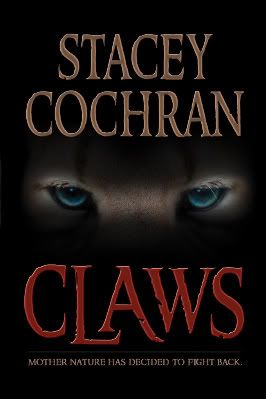
Stacey Cochran, CLAWS, my guest author

Stacey Cochran is my guest blogger this week. He's the author of CLAWS, his latest novel, as well as the Colorado Sequence. Stacey teaches writing at NCSU and is the organizer of ever-growing Write 2 Publish Meetup group, which promotes authors, publishing and writing in the Raleigh area. To find out more info about Stacey, please visit his website here.

How to Publish a Book Blog by Stacey Cochran


Sunday, May 17, 2009

How to Publish a Book: CLAWS Book Tour Day 3
Day 3 of my 45-day blog tour sees me visiting my good friend Alice Osborn's blog. At her place today, I discuss the background and motivation driving the writing of CLAWS. Yesterday, I was able to line up another interview. This one will be a Skype interview to air at podioracket.com. For those who haven't tried Skype yet (yesterday I made my first Skype call), it's essentially a way to make phone calls using your computer. Basically, you just talk into the internal mike on your computer to the person on the other end and they speak back through your computer's speakers (note: this is the non-technical definition). It's really pretty neat. So what the gals at podioracket.com are doing is an audio-interview call-in show with authors who publish their books at Podiobooks.comIt's an inspiring programming model. 10:30 am est